The 7 Most Common Fears in Scuba Diving (And Why They Happen)
Scuba diving is one of the most extraordinary experiences a person can have. Yet even experienced divers sometimes encounter moments of anxiety underwater.
This is completely normal.
Our brains are wired to respond cautiously in unfamiliar environments, especially when breathing equipment, depth, and limited visibility are involved.
Understanding these responses is the first step toward managing them effectively.
Below are seven of the most common fears divers experience — and why they occur.
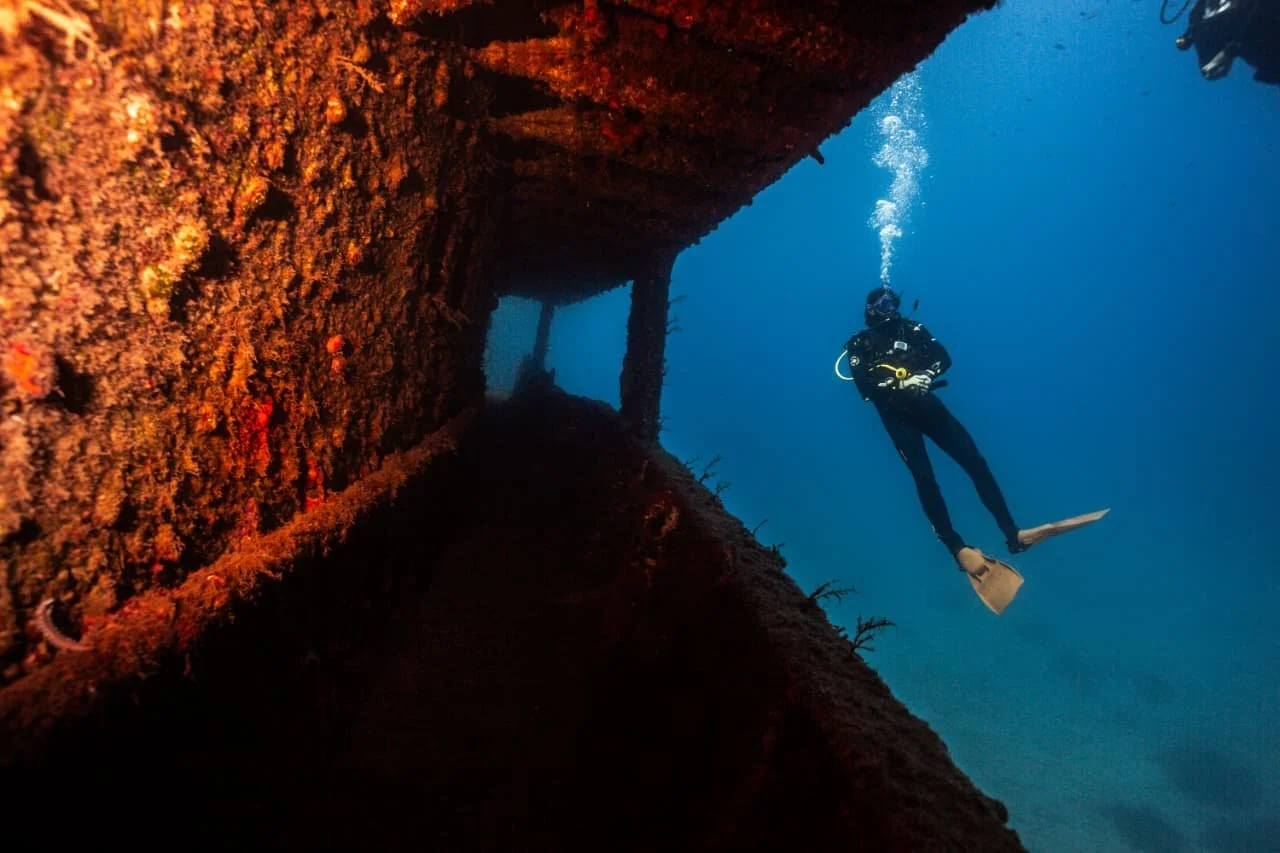
1. Fear of Running Out of Air
This is one of the most fundamental fears in diving.
Even when equipment is functioning correctly and air supply is sufficient, the brain can still interpret changes in breathing or increased effort as a potential threat.
When breathing becomes faster, it can trigger a feedback loop where the diver feels increasingly stressed.
Learning to regulate breathing and monitor air consumption calmly is one of the most important psychological skills in diving.
2. Fear of Panic Underwater
Many divers worry not about a specific situation, but about the possibility of panicking.
The underwater environment can amplify sensations such as increased breathing, limited movement, or temporary disorientation.
Without the right mental tools, these sensations can escalate into panic.
However, panic rarely appears suddenly — it usually builds gradually and can be interrupted early with the right awareness techniques.
3. Fear of Depth
Descending deeper into the ocean can trigger a strong psychological response.
Depth often changes the visual environment, lighting conditions, and perception of distance from the surface.
For some divers, this creates a feeling of vulnerability or loss of control.
Understanding how perception changes at depth can help divers remain calm and focused.
4. Fear of Darkness or Limited Visibility
Reduced visibility can remove familiar reference points, which the brain uses to maintain orientation and stability.
When these references disappear, divers may feel disoriented or uneasy.
This reaction is a natural response to uncertainty rather than a sign of weakness or poor diving ability.
With experience and proper mental preparation, divers can learn to remain comfortable even in lower visibility conditions.
5. Fear of Marine Life
Popular media often exaggerates the dangers of marine life.
While healthy caution around wildlife is important, most marine animals avoid human interaction.
Fear of sharks or unfamiliar creatures often comes from unfamiliarity rather than actual risk.
Education and experience can help replace fear with curiosity and respect.
6. Fear of Equipment Failure
Because diving relies on life-support equipment, some divers feel anxious about the possibility of equipment malfunction.
In reality, modern scuba systems are designed with multiple redundancies and extremely high safety standards.
Training and familiarity with equipment significantly reduce this concern.
Confidence increases when divers understand how their gear works and how to respond calmly if something unexpected occurs.
7. Fear After a Previous Bad Dive
A difficult dive experience can stay with a diver for a long time.
Even if the situation was resolved safely, the memory of stress or panic can influence future dives.
This can lead divers to avoid certain environments or lose confidence.
With the right approach, divers can process these experiences and rebuild trust in their skills and abilities.
The Missing Piece in Dive Training
Most dive courses focus heavily on technical skills such as buoyancy, equipment use, and safety procedures.
These are essential.
However, many divers are never taught how to understand and regulate the psychological responses that can arise underwater.
Learning how the mind and body respond to stress can significantly improve confidence, awareness, and overall enjoyment of diving.
Want to Understand Your Own Diving Confidence?
You can start by taking the free Diver Confidence Self-Assessment, a short test that helps identify the situations where divers most commonly experience stress or hesitation.
This assessment takes about 2 minutes and can help you better understand your own response underwater.
Take the Diver Confidence Test Below
